
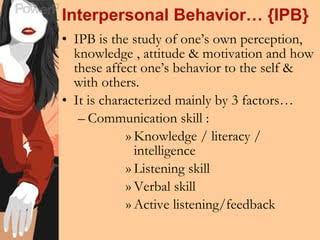
Title: Nurturing Meaningful Connections: The Art of Interpersonal Behavior
Introduction:
In a world where communication plays a pivotal role in our personal and professional lives, mastering the art of interpersonal behavior is essential for fostering meaningful connections. Whether it’s in our relationships, workplaces, or social interactions, understanding and cultivating effective interpersonal skills can enhance our interactions, build trust, and contribute to overall well-being. In this blog post, we will explore the key elements of interpersonal behavior and uncover strategies for nurturing deeper connections with others.
1. Communication: The Foundation of Interpersonal Behavior
At the heart of interpersonal behavior lies effective communication. It involves both speaking and listening attentively. By expressing ourselves clearly, using appropriate body language and tone, we can convey our thoughts and emotions authentically. Equally important is active listening, which involves fully engaging with others, validating their perspectives, and responding with empathy. Open and honest communication forms the foundation for building trust and fostering meaningful relationships.
2. Empathy: Stepping into Someone Else’s Shoes
Empathy is the ability to understand and share the feelings of another person. By cultivating empathy, we can develop a deeper understanding of others’ experiences, perspectives, and emotions. It allows us to connect on a more profound level, offering support and validation to those around us. Through active empathy, we demonstrate our genuine care and compassion, fostering a sense of belonging and trust in our interpersonal interactions.
3. Respectful Assertiveness: Balancing Our Needs and Boundaries
Interpersonal behavior requires finding the delicate balance between respecting others’ boundaries and asserting our own needs. Respectful assertiveness involves expressing our thoughts, feelings, and boundaries confidently and respectfully, while also considering the perspectives and feelings of others. It allows us to communicate our needs clearly, negotiate conflicts, and maintain healthy boundaries in our relationships.
4. Conflict Resolution: Nurturing Constructive Dialogue
Conflicts are inevitable in any relationship. Developing effective conflict resolution skills is crucial for maintaining harmonious interpersonal connections. It involves approaching conflicts with an open mind, actively listening to all parties involved, and seeking collaborative solutions. By focusing on finding common ground and understanding different viewpoints, we can transform conflicts into opportunities for growth, strengthening our relationships in the process.
5. Emotional Intelligence: Navigating Emotions in Interpersonal Interactions
Emotional intelligence is the ability to identify, understand, and manage emotions, both in ourselves and in others. It enables us to regulate our own emotional responses and empathetically respond to the emotions of those around us. Developing emotional intelligence allows for greater self-awareness, better control over impulsive reactions, and more effective communication, leading to healthier and more fulfilling relationships.
Conclusion:
Mastering the art of interpersonal behavior is an ongoing journey that requires self-reflection, practice, and a genuine desire to connect with others. By cultivating effective communication, empathy, respectful assertiveness, conflict resolution skills, and emotional intelligence, we can nurture meaningful connections and build strong, fulfilling relationships in all aspects of our lives. Embracing these principles enables us to create a positive impact on others, fostering a world where understanding, compassion, and genuine connections thrive.

 NTA NET EXAMINATION PAPER I