Title: Exploring the Johari Window: A Path to Self-Awareness and Improved Relationships
Introduction:
In the realm of self-discovery and interpersonal relationships, the Johari Window provides a unique framework for understanding ourselves and how we interact with others. Developed by psychologists Joseph Luft and Harrington Ingham, this concept offers a fascinating insight into the dynamics of human communication and personal growth. In this blog post, we will delve into the four quadrants of the Johari Window, its significance, and how it can contribute to enhancing self-awareness and building healthier connections with those around us.
1. The Open Area: Unveiling Your Known Self
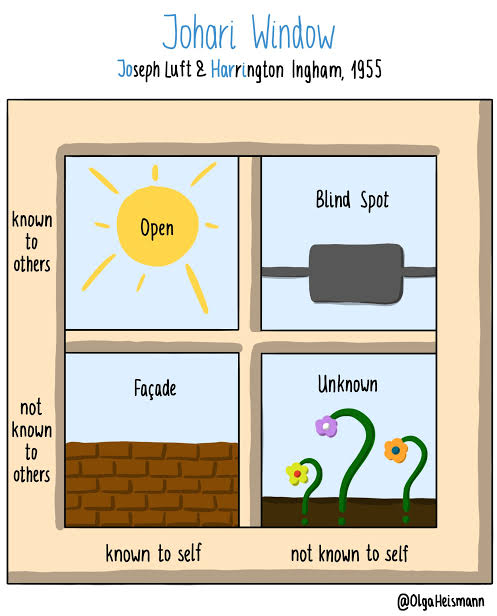
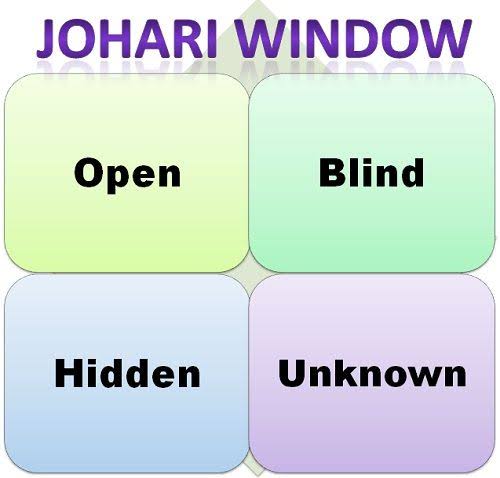
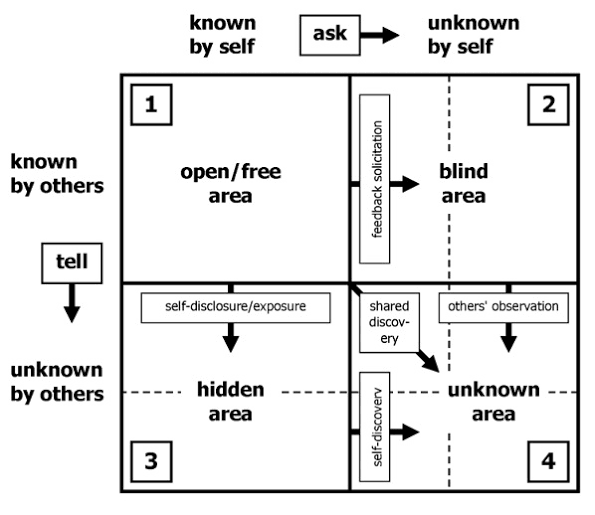
The Open Area, also known as the Arena, represents the aspects of ourselves that are known to both us and others. It encompasses our beliefs, behaviors, experiences, and emotions that we are comfortable sharing openly. By embracing transparency and expressing our thoughts and feelings authentically, we create an environment of trust and mutual understanding.
2. The Hidden Area: Discovering Your Private Self
The Hidden Area consists of those aspects of ourselves that we choose to keep hidden from others. It may include our fears, insecurities, past traumas, or personal struggles. While it’s natural to guard certain parts of ourselves, revealing these hidden aspects to trusted individuals can foster deeper connections and provide opportunities for personal growth.
3. The Blind Spot: Uncovering Your Blind Spots
The Blind Spot refers to the aspects of ourselves that others can see but remain unknown to us. It represents the gaps in our self-perception and the potential discrepancies between how we perceive ourselves and how we are perceived by others. Feedback from trusted individuals becomes crucial in expanding our self-awareness, enabling us to address our blind spots and gain a more accurate understanding of ourselves.
4. The Unknown Area: Exploring the Uncharted Territory
The Unknown Area represents the untapped potential within us, including hidden talents, undiscovered passions, and unrealized capabilities. It is the realm of self-discovery and personal growth, where we can actively seek new experiences, challenge our limitations, and expand the boundaries of our self-awareness. Embracing the unknown allows us to unlock our true potential and lead a more fulfilling life.
Conclusion:
The Johari Window provides a powerful framework for self-reflection, self-awareness, and personal growth. By exploring the four quadrants of the window, we gain insights into our known and hidden selves, uncover our blind spots, and embrace the unexplored aspects of our being. The journey of self-discovery facilitated by the Johari Window not only enhances our understanding of ourselves but also fosters healthier and more meaningful relationships with others. Through open and honest communication, feedback, and a willingness to explore the unknown, we can continuously expand our window and create a more authentic and fulfilling life.

 NTA NET EXAMINATION PAPER I