Title: Unlocking Personal Growth through Transaction Analysis
Introduction:
In the realm of psychology and personal development, transaction analysis offers a valuable framework for understanding our interactions and relationships with others. Developed by Eric Berne, this concept provides insights into our communication patterns, emotional dynamics, and opportunities for personal growth. In this blog post, we will delve into transaction analysis, its key components, and how it can empower us to cultivate healthier relationships and enhance our self-awareness.
1. What is Transaction Analysis?
Transaction analysis focuses on the analysis of social transactions, which are the interactions or exchanges that occur between individuals. These transactions involve both verbal and non-verbal communication and provide a window into the underlying thoughts, emotions, and relational dynamics.
2. Ego States: Understanding the Drivers of Behavior
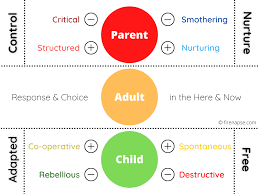
Central to transaction analysis are the three ego states: Parent, Adult, and Child. The Parent state is influenced by learned behaviors and external influences, the Adult state is rational and objective, and the Child state reflects our emotions, desires, and experiences. By recognizing and understanding these ego states within ourselves and others, we can gain insights into the motivations behind our behavior and the dynamics in our relationships.
3. Transactional Analysis Games: Patterns of Interaction
Transactional analysis identifies various patterns of interaction known as “games.” These games involve repetitive, unproductive, and often unconscious exchanges that can hinder authentic connection and personal growth. By becoming aware of these games, such as the “Blame Game” or “Rescuer-Victim Game,” we can break free from destructive patterns and foster healthier communication.
4. Life Scripts: Rewriting Our Narrative
Life scripts are unconscious belief systems that shape our thoughts, emotions, and behaviors. These scripts are often formed in childhood and can influence our choices and interactions throughout life. Transaction analysis helps us identify and challenge limiting scripts, allowing us to rewrite our narrative and make conscious choices aligned with our values and aspirations.
5. Autonomy and Personal Growth
Transaction analysis empowers individuals to develop autonomy, which is the ability to make independent choices and take responsibility for one’s actions. By fostering self-awareness, understanding our ego states, and consciously choosing our transactions, we can cultivate healthier relationships, resolve conflicts, and embrace personal growth.
Conclusion:
Transaction analysis provides a powerful lens through which we can understand our communication patterns, emotional dynamics, and opportunities for personal growth. By recognizing our ego states, becoming aware of transactional games, and challenging limiting life scripts, we can cultivate healthier relationships, improve communication, and lead more fulfilling lives. Transaction analysis serves as a pathway to self-awareness, empowering us to make conscious choices, foster authentic connections, and unlock our true potential.

 NTA NET EXAMINATION PAPER I