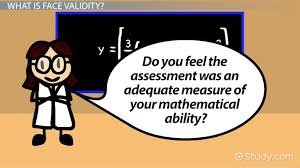
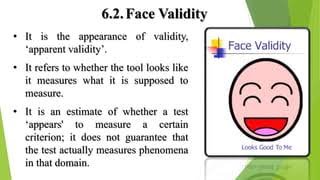
Face validity is a type of validity that refers to the extent to which a measurement or research method appears to measure what it is intended to measure on the surface or at face value. It is a subjective assessment based on the perception and judgment of individuals.
To provide you with a real-world example of face validity, let’s consider a scenario involving a job interview. Imagine a company is hiring for a position that requires excellent communication skills. As part of the interview process, they decide to include a brief writing task to assess candidates’ writing abilities.
In this case, the face validity of the writing task would be the extent to which it appears to be relevant and appropriate for assessing communication skills. The hiring managers and interviewers would consider whether the task seems to align with the job requirements and whether it intuitively captures the desired skills.
If the interviewers believe that the writing task is a reasonable indicator of communication skills based on their subjective judgment, they would consider the task to have face validity. However, it’s important to note that face validity alone is not sufficient to establish the actual validity of a measure. It is a preliminary assessment that can guide further evaluation and examination of the measurement’s validity.
In summary, face validity is a subjective assessment of how well a measurement or research method appears to measure what it intends to measure. It is often used as an initial indicator of validity but should be accompanied by additional validity testing to ensure the accuracy and reliability of the measurement.

 NTA NET EXAMINATION PAPER I