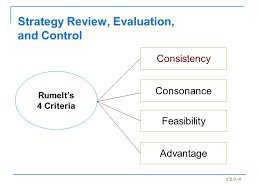
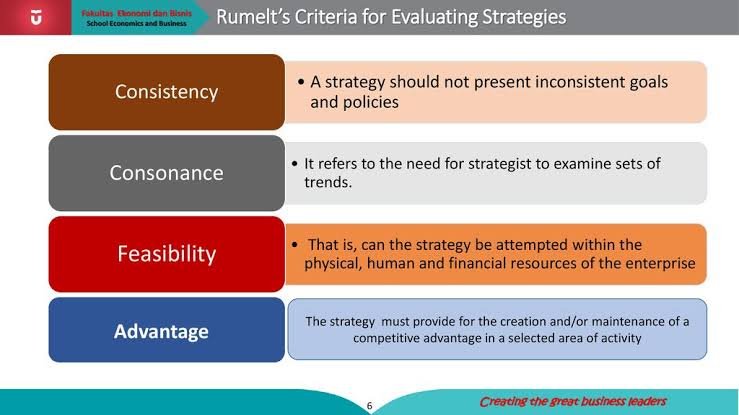
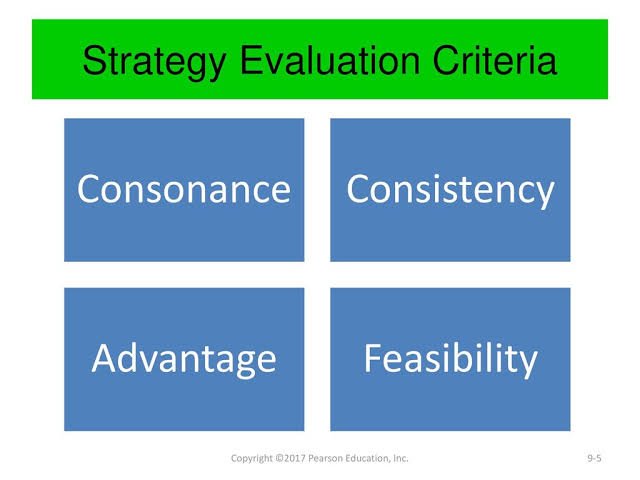
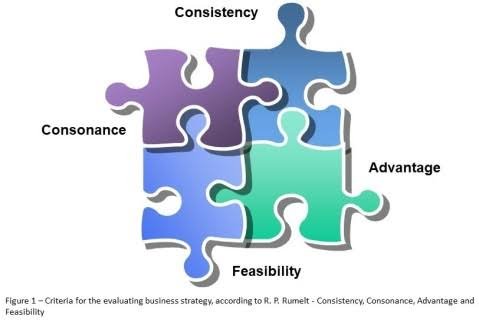
Richard Rumelt, a renowned strategy scholar, proposed four criteria for evaluating strategies in his book “Good Strategy/Bad Strategy.” These criteria can be applied in real-life situations to assess the effectiveness of strategies. Let’s explore each criterion and provide examples:
1. A Good Strategy has a Clear and Coherent Diagnosis: This criterion emphasizes the importance of accurately diagnosing the core challenge or problem that an organization faces. A strategy should provide a clear understanding of the obstacles or opportunities at hand. For instance, consider a retail company facing declining sales due to increased competition from online retailers. A good strategy would involve a diagnosis that recognizes the need to improve the company’s online presence, enhance customer experience, and offer unique value propositions.
2. A Good Strategy Leverages a Guiding Policy: This criterion focuses on the overarching approach or guiding principles that shape a strategy. It involves making choices and setting priorities based on a deep understanding of the organization’s resources, capabilities, and the competitive landscape. Let’s say a technology company aims to establish itself as a market leader in sustainability. The guiding policy might involve investing in renewable energy research and development, implementing eco-friendly manufacturing processes, and partnering with environmental organizations to create a positive brand image.
3. A Good Strategy Deploys Coherent Actions: This criterion emphasizes the importance of aligning an organization’s actions with its strategy. It involves implementing a set of coordinated and complementary initiatives that work together to achieve the desired outcomes. For example, an airline company that wants to differentiate itself through excellent customer service might deploy actions such as intensive employee training programs, implementing a customer feedback system, and offering personalized in-flight experiences to align with its strategic objective.
4. A Good Strategy Drives Substantial Results: This criterion emphasizes the importance of delivering significant and measurable outcomes. A good strategy should lead to tangible improvements in the organization’s performance, market position, or competitive advantage. Let’s consider a healthcare provider aiming to reduce patient readmissions and improve overall patient outcomes. A good strategy might involve implementing a comprehensive care coordination program, enhancing post-discharge follow-up procedures, and collaborating with community health organizations. Substantial results could be measured through reduced readmission rates, improved patient satisfaction scores, and lower healthcare costs.
These examples illustrate how Rumelt’s criteria for evaluating strategies can be applied in real-life scenarios. By assessing strategies against these criteria, organizations can determine their effectiveness and make adjustments as necessary to achieve their desired goals.
Rumelt’s criteria for evaluating strategies:
Title: Evaluating Strategies: Rumelt’s Criteria for Success
Introduction:
Crafting effective strategies is crucial for organizations to navigate complex and competitive landscapes. However, not all strategies are created equal. In his influential work, “Good Strategy/Bad Strategy,” Richard Rumelt outlined four criteria for evaluating strategies. By examining strategies against these criteria, organizations can assess their effectiveness and make informed decisions. In this blog post, we will delve into Rumelt’s criteria and explore real-life examples to illustrate their application.
1. Clear and Coherent Diagnosis:
A good strategy starts with a thorough diagnosis of the core challenge or opportunity. Take, for instance, a software company facing declining market share. Through careful analysis, the company diagnoses the issue as a lack of innovation and outdated product offerings. A clear and coherent strategy would involve investing in research and development, fostering a culture of innovation, and launching new products aligned with customer needs.
2. Guiding Policy:
A guiding policy sets the direction for a strategy. Let’s consider a hospitality chain seeking to expand globally. Their guiding policy could involve targeting emerging markets with a focus on luxury experiences. This policy would drive decisions such as acquiring high-end properties in key locations, partnering with local luxury brands, and tailoring services to cater to affluent travelers.
3. Coherent Actions:
Actions taken should align with the overall strategy and reinforce each other. For example, an e-commerce company aiming to enhance the customer experience may deploy a range of actions. These could include optimizing website usability, streamlining the checkout process, offering personalized product recommendations, and providing prompt customer support. These coherent actions work together to create a seamless and satisfying customer journey.
4. Substantial Results:
Ultimately, a good strategy should yield substantial and measurable results. Consider a renewable energy company committed to combating climate change. Their strategy might involve building large-scale solar and wind farms, lobbying for favorable renewable energy policies, and partnering with local communities. Substantial results could be measured in terms of increased renewable energy capacity, reduced carbon emissions, and positive societal impact.
Conclusion:
Rumelt’s criteria for evaluating strategies offer a valuable framework for organizations to assess their strategic plans. By ensuring a clear diagnosis, establishing a guiding policy, implementing coherent actions, and driving substantial results, organizations can increase their chances of success. Real-life examples demonstrate how these criteria can be applied across various industries, enabling organizations to make informed strategic decisions and adapt to dynamic environments.
Remember, the key is not just to develop strategies but to evaluate and refine them continuously to stay ahead in today’s ever-changing world.
We hope you found this blog post insightful and informative. Stay tuned for more strategy-related content in the future!

 NTA NET EXAMINATION PAPER I