


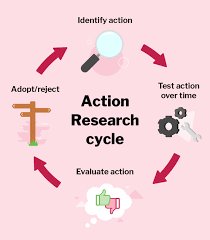

Certainly! Here’s an example of action research:
Let’s say a group of teachers in a school notices that the students in their math classes are struggling with problem-solving skills. They decide to conduct action research to address this issue.
1. Identifying the problem: The teachers observe that the students have difficulty applying mathematical concepts to real-life situations and are often unable to solve complex word problems.
2. Setting a goal: The teachers set a goal to improve the problem-solving skills of their students by implementing new teaching strategies.
3. Planning: The teachers research different teaching methods and interventions that have been successful in improving problem-solving skills in math. They also collaborate to develop a lesson plan and instructional materials based on these strategies.
4. Implementation: The teachers introduce the new teaching methods in their classrooms. They incorporate hands-on activities, real-life examples, and problem-solving tasks into their lessons. They also provide students with opportunities for group work and peer discussion to enhance their problem-solving abilities.
5. Data collection: The teachers collect data throughout the implementation phase. They use various assessment methods such as pre- and post-tests, observations, and student feedback to measure the impact of the new teaching strategies on the students’ problem-solving skills.
6. Analysis: After collecting the data, the teachers analyze it to evaluate the effectiveness of the intervention. They compare the students’ performance before and after the implementation of the new teaching methods, looking for improvements in problem-solving abilities.
7. Reflection and adjustment: Based on the data analysis, the teachers reflect on the results and identify areas for improvement. They discuss their findings as a group and make adjustments to their instructional strategies if necessary. This process may involve modifying lesson plans, providing additional support to struggling students, or exploring further research-based interventions.
8. Sharing and dissemination: The teachers share their findings and experiences with other educators within the school or at professional development conferences. They may present their action research project, discuss their results, and share the successful strategies they implemented to improve problem-solving skills.
By engaging in this action research process, the teachers actively contribute to improving their students’ problem-solving abilities and gain valuable insights into effective teaching practices. Action research allows them to address a specific problem, implement changes, and assess the impact of their interventions, ultimately leading to informed decision-making and continuous improvement in their teaching practices.

 NTA NET EXAMINATION PAPER I