Q5. In the two sets given below, Set I provide levels teaching while Set II gives their focus of concern:
Set II (Focus of concern)
of
Set I (Levels of Teaching)
(a) Autonomous
(1) Problem raising and problem
development level
Solving
(b) Memory level (1) Affects and feelings
(c) Understanding level (i) Recall of facts and information (iv) Seeing of relationship among
(d) Reflective level
facts and their examples
(v) Peer learning
Select correct answer from the options given below:Sure! Here are explanations of each level of teaching with real-life examples:
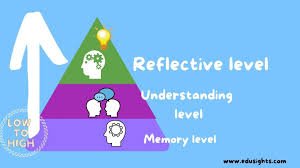
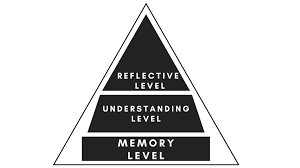
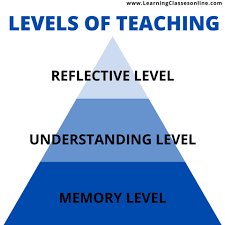
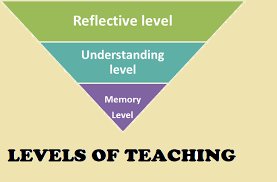
(a) Autonomous – This level of teaching focuses on problem raising and problem solving. In real life, an example of autonomous learning could be a group of students working together to solve a complex math problem. They would identify the problem, analyze it, discuss potential solutions, and apply critical thinking skills to arrive at a solution collectively, without heavy guidance from the teacher.
(b) Memory level – At this level, the emphasis is on recalling facts and information. In everyday life, a practical example of memory-level learning is when someone is studying for a history exam. They would need to remember specific dates, events, and names of historical figures to answer questions accurately.
(c) Understanding level – This level of teaching involves seeing relationships among facts and their examples. A real-life example of understanding-level learning can be seen in a science class, where students learn about the water cycle. They would study the various components of the water cycle, such as evaporation, condensation, and precipitation, and understand how these processes are interconnected to form the cycle.
(d) Reflective level – The reflective level of teaching focuses on affects and feelings. In practical terms, this level can be observed in a literature class, where students analyze and discuss a novel. They would reflect on the emotions evoked by the characters, explore the themes, and express their own thoughts and feelings about the story.
These examples illustrate how each level of teaching engages learners at different cognitive levels and encourages them to apply their knowledge and skills in various ways.
A. (a)-(i), (b)-(ii), (c)-(iv), (d)-(v)
B. (a)-(i), (b)-(iv), (c)-(iii), (d)-(ii)
(a)-(ii), (b)-(iii), (c)-(iv), (d)-(i)

 NTA NET EXAMINATION PAPER I