Introduction:
In the realm of logic, the Square of Opposition stands as a powerful tool that helps us understand the intricate relationships between categorical statements. This philosophical framework provides a structured way of analyzing the logical connections between propositions, unraveling the complexities that lie within. Join me on this intellectual journey as we delve into the depths of the Square of Opposition, unlocking its secrets and discovering the best strategies to apply it in various scenarios.
Section 1: Understanding the Square of Opposition
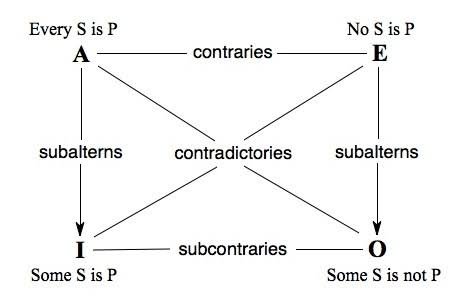
In this section, we will introduce the Square of Opposition and its components. We’ll explore the four categorical propositions: A, E, I, and O, and their corresponding logical relationships. Through clear examples and explanations, we’ll grasp the essence of these relationships and gain a solid foundation for further exploration.
Section 2: Analyzing Contradiction and Contrariety
Here, we dive into the contrasting concepts of contradiction and contrariety. We’ll examine how contradictory statements directly oppose each other, where one must be true while the other is false. Furthermore, we’ll explore contraries, statements that cannot both be true but may both be false, and dissect the nuances of these relationships.
Section 3: Unraveling Subcontrariety and Subalternation
Moving forward, we’ll delve into subcontrariety, where two statements may both be true but cannot both be false. We’ll explore the subtle differences between this relationship and its counterparts, shedding light on the intricacies of logical opposition. Additionally, we’ll navigate the realm of subalternation, understanding the connections between universal and particular propositions.
Section 4: Applying the Square of Opposition
In this section, we’ll shift gears and focus on practical applications of the Square of Opposition. We’ll demonstrate how this framework aids in argument analysis, critical thinking, and logical reasoning. By showcasing real-world examples and exercises, we’ll provide valuable insights into using the Square of Opposition as a tool for effective communication and decision-making.
Section 5: Embracing the Best Approach
Concluding our journey through the Square of Opposition, we’ll highlight the best strategies for utilizing this logical framework. We’ll discuss its strengths and limitations, and provide guidance on applying it in different contexts. By embracing the best practices, we can harness the power of the Square of Opposition to enhance our logical reasoning skills and foster deeper understanding.
Conclusion:
The Square of Opposition is a fascinating construct that offers a systematic approach to unraveling logical relationships. By exploring its concepts, analyzing its applications, and embracing the best strategies, we can enhance our ability to reason logically and engage in meaningful discourse. As we conclude this exploration, let us carry the knowledge gained and continue to explore the vast landscape of logic, armed with a valuable tool that unlocks the secrets of the Square of Opposition.

 NTA NET EXAMINATION PAPER I