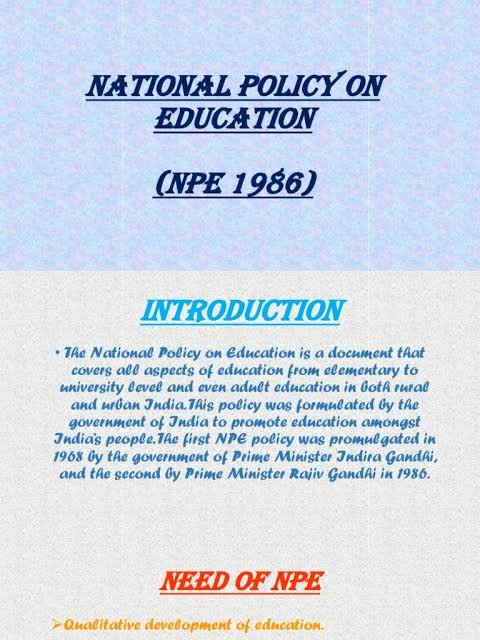
The National Education Policy (NEP) of 1986 was a landmark policy document in India that aimed to bring about comprehensive reforms in the country’s education system. It was formulated to address the challenges and shortcomings in the existing education system and provide a framework for its development. Here are some key features and highlights of the NEP 1986:
1. Universalization of Education: The policy emphasized the goal of universalizing elementary education and making education accessible to all children in the age group of 6-14 years.
2. Curriculum Reforms: The NEP 1986 called for a curriculum revision with a focus on a learner-centered approach, interdisciplinary studies, and the integration of vocational education.
3. Vocational Education: The policy recognized the importance of vocational education and aimed to integrate it into the mainstream education system to provide practical skills and enhance employability.
4. Teacher Education: The NEP 1986 stressed the need for improving the quality of teacher education programs and promoting continuous professional development for teachers.
5. Quality Assurance: The policy emphasized the importance of maintaining quality standards in education and introduced measures for evaluation, accreditation, and monitoring of educational institutions.
6. Technology in Education: The NEP 1986 recognized the potential of technology in enhancing teaching and learning processes and encouraged the use of educational technology tools and resources.
7. Adult Education: The policy highlighted the significance of adult education and aimed to provide opportunities for adult learners to acquire functional literacy and essential skills.
8. Equity and Social Justice: The NEP 1986 focused on addressing social and gender disparities in education and aimed to provide equal opportunities for all sections of society.
9. Higher Education Reforms: The policy advocated for reforms in higher education, including promoting research and innovation, encouraging autonomy and academic freedom for universities, and strengthening the linkages between education and industry.
10. Financial Support: The NEP 1986 recognized the need for increased investment in education and called for adequate funding and resource allocation to support the implementation of educational reforms.
The NEP 1986 laid the foundation for subsequent reforms in the education sector in India. However, it was later revised and replaced by the National Education Policy of 2020, which introduced significant changes and a new vision for education in the country.
Please note that the information provided here is based on the NEP 1986 as of my knowledge cutoff in September 2021. For the most up-to-date information, it is advisable to refer to official sources or the latest versions of the policy document.

 NTA NET EXAMINATION PAPER I