A sound level of 70-95 decibels (dB) is within the range of moderate to loud noise. Here are some examples of sounds that fall within this range:
– Busy street traffic: Approximately 70-80 dB
– Vacuum cleaner: Around 70-80 dB
– Restaurant or café noise: Typically around 70-80 dB
– Hairdryer: Approximately 80-90 dB
– Blender: Around 80-90 dB
– Motorcycles: Varies, but can range from 80-95 dB
It’s important to note that prolonged exposure to sounds in the higher end of this range (90-95 dB) can be harmful to hearing and may require hearing protection. Additionally, individual sensitivity to noise can vary, so what may be tolerable for one person might be uncomfortable or bothersome for another.
Author Archives: Er. Navneet Semwal
Blogger
E-governance
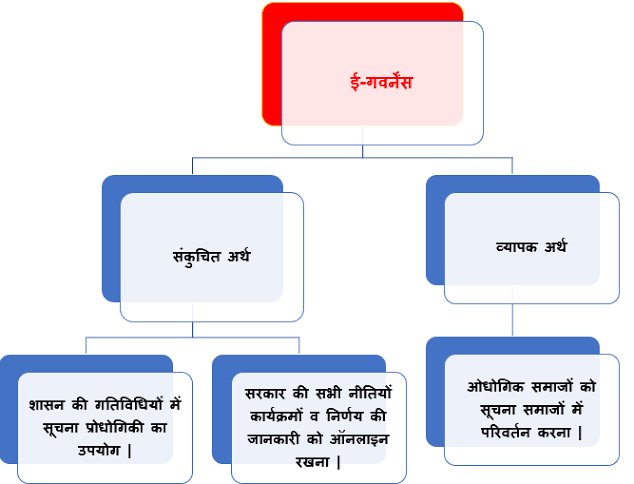
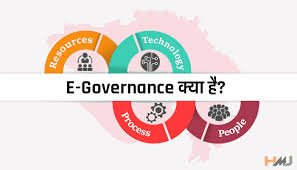
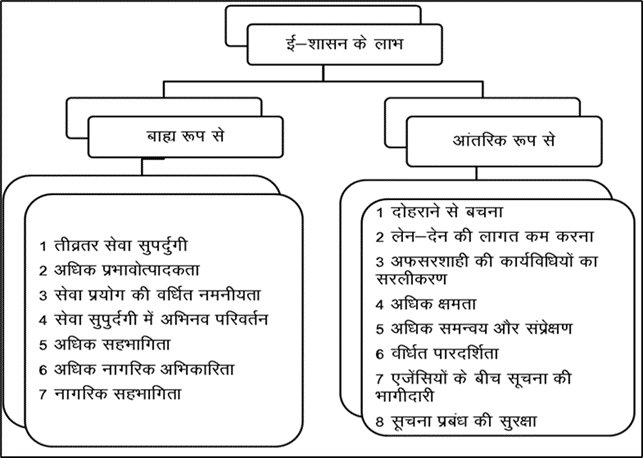
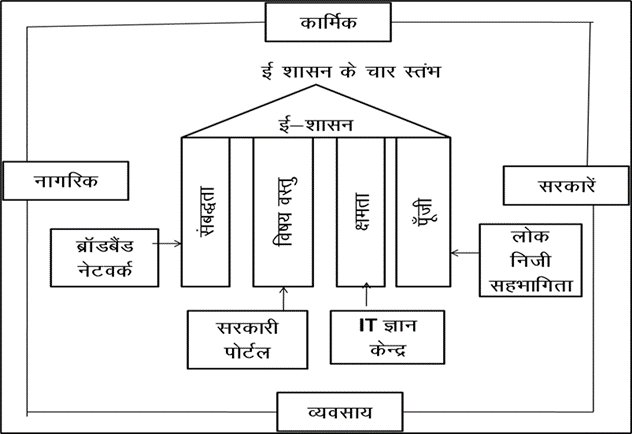
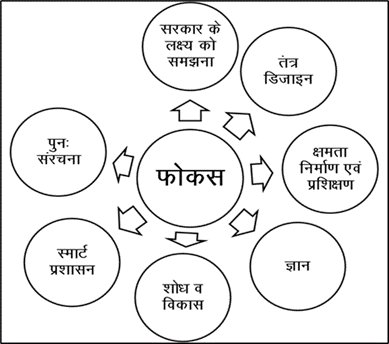
Q23. Which description is appropriate among the following for ‘E-Governance’?
A. To engage, enable and empower the citizens
B. To provide fair and unbiased services to the citizens
C. To provide technology driven governance
D. To ensure people’s faith in E-Commerce applications
‘ई-गवर्नेस’ के लिए निम्नलिखित में से कौन-सा विवरण उचित है?
A. नागरिकों को संलग्न, सक्षम और सशक्त बनाना
B. नागरिकों को न्यायोचित और निष्पक्ष सेवाएं प्रदान करना
C. प्रौद्योगिकी संचालित शासन प्रदान करना D. ई-कॉमर्स अनुप्रयोगों में लोगों के विश्वास को सुनिश्चित करना
You are correct. The appropriate description for ‘E-Governance’ is:
A. नागरिकों को संलग्न, सक्षम और सशक्त बनाना
A. To engage, enable, and empower the citizens.
Let me explain why the other options (B, C, and D) are not appropriate descriptions for ‘E-Governance’:
B. नागरिकों को न्यायोचित और निष्पक्ष सेवाएं प्रदान करना (To provide fair and unbiased services to the citizens):
While fairness and unbiased services are important aspects of governance, ‘E-Governance’ is not solely focused on providing services but also involves the use of technology to enhance governance processes and citizen engagement. Option B does not capture the comprehensive nature of ‘E-Governance.’
C. प्रौद्योगिकी संचालित शासन प्रदान करना (To provide technology-driven governance):
This option is partially correct, as ‘E-Governance’ does involve the use of technology in governance processes. However, it does not fully encompass the broader goals of citizen engagement and empowerment, which are significant components of ‘E-Governance.’
D. ई-कॉमर्स अनुप्रयोगों में लोगों के विश्वास को सुनिश्चित करना (To ensure people’s faith in e-commerce applications):
Option D is unrelated to ‘E-Governance.’ It refers to building trust in e-commerce applications, which is not the primary objective of ‘E-Governance.’ ‘E-Governance’ focuses on using technology for effective governance, transparency, and citizen participation in the government’s functioning.
Therefore, option A (नागरिकों को संलग्न, सक्षम और सशक्त बनाना) is the most appropriate description for ‘E-Governance’ as it emphasizes engaging, enabling, and empowering citizens in the governance processes.
Upon reevaluation, both options A (नागरिकों को संलग्न, सक्षम और सशक्त बनाना) and C (प्रौद्योगिकी संचालित शासन प्रदान करना) can be considered appropriate descriptions for ‘E-Governance.’ They capture different aspects of citizen engagement, empowerment, and the use of technology in governance.
The Association of Indian Universities (AIU)

The Association of Indian Universities (AIU) is an organization based in India that serves as a representative body of universities in the country. It was established in 1925 and has its headquarters in New Delhi.
The primary objectives of the Association of Indian Universities are to promote and coordinate higher education in India and to facilitate the exchange of knowledge, information, and best practices among member universities. It acts as a liaison between the Indian government and universities, and also collaborates with international organizations and universities worldwide.
The AIU provides a platform for member universities to discuss and address issues related to higher education, academic policies, curriculum development, research, and international collaborations. It also undertakes research projects, organizes seminars, conferences, and workshops, and publishes reports and journals related to higher education in India.
In addition, the AIU is responsible for evaluating foreign qualifications and granting equivalence to degrees awarded by universities outside India. This process is known as the AIU Equivalence Certificate, which helps individuals who have obtained their qualifications from foreign universities to seek employment or pursue further studies in India.
Overall, the Association of Indian Universities plays a crucial role in fostering cooperation and development among universities in India and promoting the quality and relevance of higher education in the country.
Articulation and naturalization
Articulation and naturalization are two important concepts in language learning. Let’s explore each of them:
1. Articulation: Articulation refers to the physical production of sounds and words in a language. It involves coordinating and manipulating the different parts of the vocal tract, including the tongue, lips, teeth, and vocal cords, to create specific sounds and pronounce words accurately. Articulation encompasses factors such as pronunciation, intonation, stress, and rhythm.
When learning a new language, articulation plays a crucial role in achieving clear and understandable communication. Proper articulation helps learners produce accurate sounds and pronounce words correctly, enabling effective communication with native speakers. Focusing on articulation involves practicing the correct placement of the articulatory organs to reproduce the sounds of the target language. This includes learning the specific phonetic and phonological rules of the language and developing muscle memory through repetition and practice.
2. Naturalization: Naturalization, in the context of language learning, refers to the process of acquiring fluency and proficiency in a language to the point where it feels natural and automatic. It involves internalizing the language so that speaking, understanding, and expressing oneself become second nature, resembling the natural use of the language by native speakers.
Naturalization goes beyond simply learning vocabulary and grammar rules. It encompasses aspects such as idiomatic expressions, cultural nuances, colloquialisms, and the ability to understand and use language in context. Achieving naturalization requires immersion in the language, engaging in meaningful conversations, exposure to authentic materials, and cultural integration.
While articulation focuses on the accurate production of sounds and words, naturalization aims for the holistic integration of language skills, cultural understanding, and authentic usage. Both aspects are important in language learning, as proper articulation facilitates clear communication, while naturalization enables fluency and effective interaction in the target language.
Effective language learning involves a combination of focused articulation practice and exposure to native-like input to achieve both accurate pronunciation and naturalization of the language.
PARALINGUISTICS


Paralinguistics refers to the non-verbal elements of communication that complement and enhance the meaning of spoken language. These elements include tone of voice, pitch, volume, tempo, intonation, and other vocal cues. Here are some examples of paralinguistic features:
1. Tone of voice: The way someone speaks can convey various emotions or attitudes. For instance, a sarcastic tone may indicate irony, while a soothing tone can convey comfort or reassurance.
2. Pitch: Variation in the pitch of one’s voice can convey different meanings. A high-pitched voice may indicate excitement or surprise, while a low-pitched voice can convey seriousness or authority.
3. Volume: The loudness or softness of someone’s voice can convey different messages. A loud voice might indicate enthusiasm or anger, while a soft voice may indicate intimacy or confidentiality.
4. Tempo: The speed at which someone speaks can convey emotions or convey urgency. Speaking rapidly may indicate excitement or nervousness, while speaking slowly can convey thoughtfulness or seriousness.
5. Intonation: The rise and fall of pitch patterns in speech can convey additional meaning. A rising intonation at the end of a sentence may indicate a question, while a falling intonation can indicate a statement or assertion.
6. Pauses: The use of deliberate pauses during speech can add emphasis, indicate hesitation, or create suspense. Pauses can also allow for turn-taking in conversation.
7. Laughing or crying: Non-verbal vocalizations like laughter or crying can convey emotions and add depth to communication.
8. Accent or dialect: The way someone speaks can reflect their cultural background, regional origin, or social identity, influencing how their words are interpreted.
9. Sighs or breaths: Audible breaths or sighs can convey emotions such as frustration, relief, or fatigue, adding extra meaning to spoken language.
10. Vocal quality: Individual vocal characteristics, such as a rough voice, a nasal tone, or a smooth and melodic voice, can affect how someone’s message is perceived.
These paralinguistic features play a crucial role in communication, helping to convey nuances, emotions, and intentions that may not be explicitly stated in the words themselves.
Exploring the Square of Opposition: Unlocking the Secrets of Logical Relationships
Introduction:
In the realm of logic, the Square of Opposition stands as a powerful tool that helps us understand the intricate relationships between categorical statements. This philosophical framework provides a structured way of analyzing the logical connections between propositions, unraveling the complexities that lie within. Join me on this intellectual journey as we delve into the depths of the Square of Opposition, unlocking its secrets and discovering the best strategies to apply it in various scenarios.
Section 1: Understanding the Square of Opposition
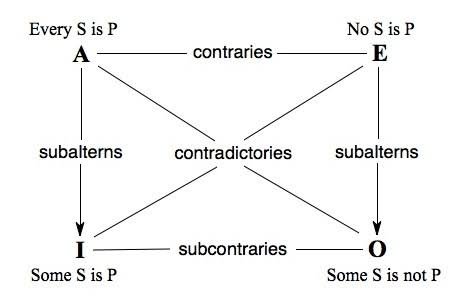
In this section, we will introduce the Square of Opposition and its components. We’ll explore the four categorical propositions: A, E, I, and O, and their corresponding logical relationships. Through clear examples and explanations, we’ll grasp the essence of these relationships and gain a solid foundation for further exploration.
Section 2: Analyzing Contradiction and Contrariety
Here, we dive into the contrasting concepts of contradiction and contrariety. We’ll examine how contradictory statements directly oppose each other, where one must be true while the other is false. Furthermore, we’ll explore contraries, statements that cannot both be true but may both be false, and dissect the nuances of these relationships.
Section 3: Unraveling Subcontrariety and Subalternation
Moving forward, we’ll delve into subcontrariety, where two statements may both be true but cannot both be false. We’ll explore the subtle differences between this relationship and its counterparts, shedding light on the intricacies of logical opposition. Additionally, we’ll navigate the realm of subalternation, understanding the connections between universal and particular propositions.
Section 4: Applying the Square of Opposition
In this section, we’ll shift gears and focus on practical applications of the Square of Opposition. We’ll demonstrate how this framework aids in argument analysis, critical thinking, and logical reasoning. By showcasing real-world examples and exercises, we’ll provide valuable insights into using the Square of Opposition as a tool for effective communication and decision-making.
Section 5: Embracing the Best Approach
Concluding our journey through the Square of Opposition, we’ll highlight the best strategies for utilizing this logical framework. We’ll discuss its strengths and limitations, and provide guidance on applying it in different contexts. By embracing the best practices, we can harness the power of the Square of Opposition to enhance our logical reasoning skills and foster deeper understanding.
Conclusion:
The Square of Opposition is a fascinating construct that offers a systematic approach to unraveling logical relationships. By exploring its concepts, analyzing its applications, and embracing the best strategies, we can enhance our ability to reason logically and engage in meaningful discourse. As we conclude this exploration, let us carry the knowledge gained and continue to explore the vast landscape of logic, armed with a valuable tool that unlocks the secrets of the Square of Opposition.
FLEETING-MICRO EXPRESSION-AS PART OF CLASSROOM COMMUNICATION





“Fleeting” refers to something that is brief, transitory, or passing quickly. It often describes moments, feelings, or experiences that are fleeting, meaning they don’t last long or are temporary in nature. For example, a fleeting moment of happiness could be a brief feeling of joy that quickly disappears. Similarly, a fleeting opportunity could be something that arises briefly and then vanishes. The term “fleeting” emphasizes the ephemerality or brevity of a particular situation or experience.
PERFORMANCE TESTS

. Identify the tests from the list given below, which are “maximum performance tests in the context of research:
(a) Personality tests
(b) Projective personality tests
c) Achievement tests
(d) Attitude tests
e) Intelligence tests
(f) Aptitude tests
Choose correct answer from the options given below: A. (a), (b) and (c)
B. (b), (c) and (e) C. (c), (e) and (f)
D. (a), (d) and (f)
To clarify, the tests typically used to measure maximum performance in the context of research are:
(b) Projective personality tests: These tests assess an individual’s personality traits by presenting ambiguous stimuli and analyzing their responses. While they do not measure maximum performance directly, they can provide insights into an individual’s potential or underlying psychological factors.
(c) Achievement tests: These tests evaluate an individual’s knowledge or skills in a specific domain and measure their highest level of accomplishment.
(e) Intelligence tests: Intelligence tests aim to assess an individual’s cognitive abilities and intellectual potential, including their maximum performance in various cognitive tasks.
Based on these considerations, the correct answer would be:
B. (b), (c), and (e)
Let me provide a more accurate explanation of why the other statements are incorrect:
(a) Personality tests: While personality tests can provide valuable insights into an individual’s traits, they are not typically used to measure maximum performance. Personality tests focus on assessing an individual’s characteristic patterns of thoughts, feelings, and behaviors, rather than measuring their peak performance levels.
(d) Attitude tests: Attitude tests are designed to measure an individual’s attitudes, opinions, or beliefs about specific topics. They do not directly assess an individual’s maximum performance in any particular area.
(f) Aptitude tests: Aptitude tests aim to evaluate an individual’s potential or capacity to learn and perform specific tasks. While aptitude tests can provide an indication of an individual’s maximum performance in a specific domain, they are not exclusively focused on measuring maximum performance.
Therefore, the correct answer is indeed:
B. (b), (c), and (e)
LEVELS OF TEACHING
Q5. In the two sets given below, Set I provide levels teaching while Set II gives their focus of concern:
Set II (Focus of concern)
of
Set I (Levels of Teaching)
(a) Autonomous
(1) Problem raising and problem
development level
Solving
(b) Memory level (1) Affects and feelings
(c) Understanding level (i) Recall of facts and information (iv) Seeing of relationship among
(d) Reflective level
facts and their examples
(v) Peer learning
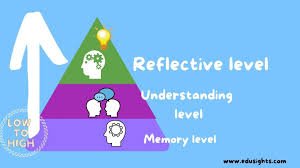
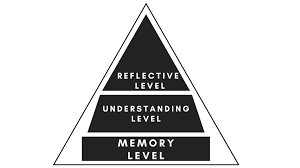
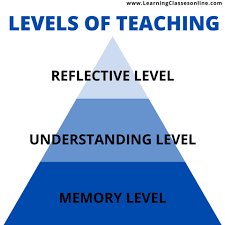
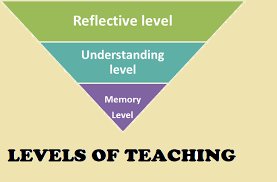
Select correct answer from the options given below:Sure! Here are explanations of each level of teaching with real-life examples:
(a) Autonomous – This level of teaching focuses on problem raising and problem solving. In real life, an example of autonomous learning could be a group of students working together to solve a complex math problem. They would identify the problem, analyze it, discuss potential solutions, and apply critical thinking skills to arrive at a solution collectively, without heavy guidance from the teacher.
(b) Memory level – At this level, the emphasis is on recalling facts and information. In everyday life, a practical example of memory-level learning is when someone is studying for a history exam. They would need to remember specific dates, events, and names of historical figures to answer questions accurately.
(c) Understanding level – This level of teaching involves seeing relationships among facts and their examples. A real-life example of understanding-level learning can be seen in a science class, where students learn about the water cycle. They would study the various components of the water cycle, such as evaporation, condensation, and precipitation, and understand how these processes are interconnected to form the cycle.
(d) Reflective level – The reflective level of teaching focuses on affects and feelings. In practical terms, this level can be observed in a literature class, where students analyze and discuss a novel. They would reflect on the emotions evoked by the characters, explore the themes, and express their own thoughts and feelings about the story.
These examples illustrate how each level of teaching engages learners at different cognitive levels and encourages them to apply their knowledge and skills in various ways.
A. (a)-(i), (b)-(ii), (c)-(iv), (d)-(v)
B. (a)-(i), (b)-(iv), (c)-(iii), (d)-(ii)
(a)-(ii), (b)-(iii), (c)-(iv), (d)-(i)
LEVELS OF TEACHING
Q5. In the two sets given below, Set I provide levels teaching while Set II gives their focus of concern:
Set II (Focus of concern)
of
Set I (Levels of Teaching)
(a) Autonomous
(1) Problem raising and problem
development level
Solving
(b) Memory level (1) Affects and feelings
(c) Understanding level (i) Recall of facts and information (iv) Seeing of relationship among
(d) Reflective level
facts and their examples
(v) Peer learning
Select correct answer from the options given below:Sure! Here are explanations of each level of teaching with real-life examples:
(a) Autonomous – This level of teaching focuses on problem raising and problem solving. In real life, an example of autonomous learning could be a group of students working together to solve a complex math problem. They would identify the problem, analyze it, discuss potential solutions, and apply critical thinking skills to arrive at a solution collectively, without heavy guidance from the teacher.
(b) Memory level – At this level, the emphasis is on recalling facts and information. In everyday life, a practical example of memory-level learning is when someone is studying for a history exam. They would need to remember specific dates, events, and names of historical figures to answer questions accurately.
(c) Understanding level – This level of teaching involves seeing relationships among facts and their examples. A real-life example of understanding-level learning can be seen in a science class, where students learn about the water cycle. They would study the various components of the water cycle, such as evaporation, condensation, and precipitation, and understand how these processes are interconnected to form the cycle.
(d) Reflective level – The reflective level of teaching focuses on affects and feelings. In practical terms, this level can be observed in a literature class, where students analyze and discuss a novel. They would reflect on the emotions evoked by the characters, explore the themes, and express their own thoughts and feelings about the story.
These examples illustrate how each level of teaching engages learners at different cognitive levels and encourages them to apply their knowledge and skills in various ways.
A. (a)-(i), (b)-(ii), (c)-(iv), (d)-(v)
B. (a)-(i), (b)-(iv), (c)-(iii), (d)-(ii)
(a)-(ii), (b)-(iii), (c)-(iv), (d)-(i)
 NTA NET EXAMINATION PAPER I