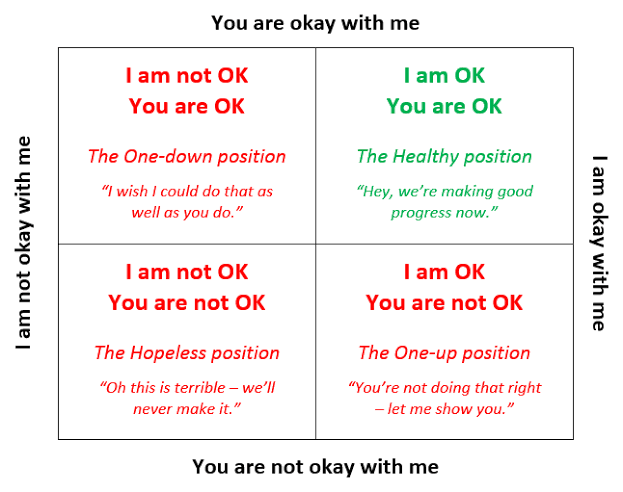
TRANSACTION ANALYSIS

Title: Unlocking Personal Growth through Transaction Analysis

Introduction:
In the realm of psychology and personal development, transaction analysis offers a valuable framework for understanding our interactions and relationships with others. Developed by Eric Berne, this concept provides insights into our communication patterns, emotional dynamics, and opportunities for personal growth. In this blog post, we will delve into transaction analysis, its key components, and how it can empower us to cultivate healthier relationships and enhance our self-awareness.

1. What is Transaction Analysis?
Transaction analysis focuses on the analysis of social transactions, which are the interactions or exchanges that occur between individuals. These transactions involve both verbal and non-verbal communication and provide a window into the underlying thoughts, emotions, and relational dynamics.

2. Ego States: Understanding the Drivers of Behavior
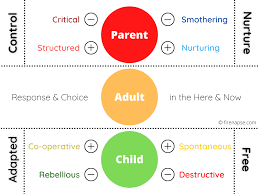
Central to transaction analysis are the three ego states: Parent, Adult, and Child. The Parent state is influenced by learned behaviors and external influences, the Adult state is rational and objective, and the Child state reflects our emotions, desires, and experiences. By recognizing and understanding these ego states within ourselves and others, we can gain insights into the motivations behind our behavior and the dynamics in our relationships.

3. Transactional Analysis Games: Patterns of Interaction
Transactional analysis identifies various patterns of interaction known as “games.” These games involve repetitive, unproductive, and often unconscious exchanges that can hinder authentic connection and personal growth. By becoming aware of these games, such as the “Blame Game” or “Rescuer-Victim Game,” we can break free from destructive patterns and foster healthier communication.

4. Life Scripts: Rewriting Our Narrative
Life scripts are unconscious belief systems that shape our thoughts, emotions, and behaviors. These scripts are often formed in childhood and can influence our choices and interactions throughout life. Transaction analysis helps us identify and challenge limiting scripts, allowing us to rewrite our narrative and make conscious choices aligned with our values and aspirations.

5. Autonomy and Personal Growth
Transaction analysis empowers individuals to develop autonomy, which is the ability to make independent choices and take responsibility for one’s actions. By fostering self-awareness, understanding our ego states, and consciously choosing our transactions, we can cultivate healthier relationships, resolve conflicts, and embrace personal growth.

Conclusion:
Transaction analysis provides a powerful lens through which we can understand our communication patterns, emotional dynamics, and opportunities for personal growth. By recognizing our ego states, becoming aware of transactional games, and challenging limiting life scripts, we can cultivate healthier relationships, improve communication, and lead more fulfilling lives. Transaction analysis serves as a pathway to self-awareness, empowering us to make conscious choices, foster authentic connections, and unlock our true potential.
JOHARI WINDOW

Title: Exploring the Johari Window: A Path to Self-Awareness and Improved Relationships

Introduction:
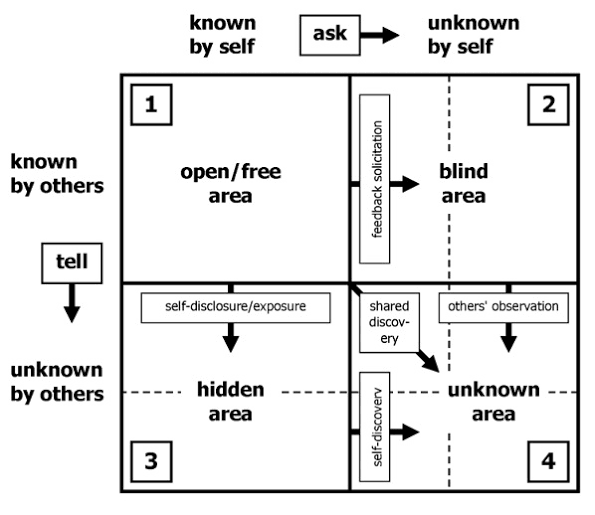
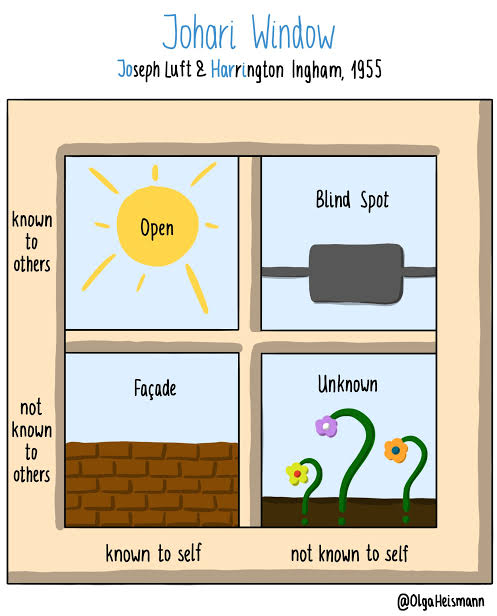
In the realm of self-discovery and interpersonal relationships, the Johari Window provides a unique framework for understanding ourselves and how we interact with others. Developed by psychologists Joseph Luft and Harrington Ingham, this concept offers a fascinating insight into the dynamics of human communication and personal growth. In this blog post, we will delve into the four quadrants of the Johari Window, its significance, and how it can contribute to enhancing self-awareness and building healthier connections with those around us.

1. The Open Area: Unveiling Your Known Self
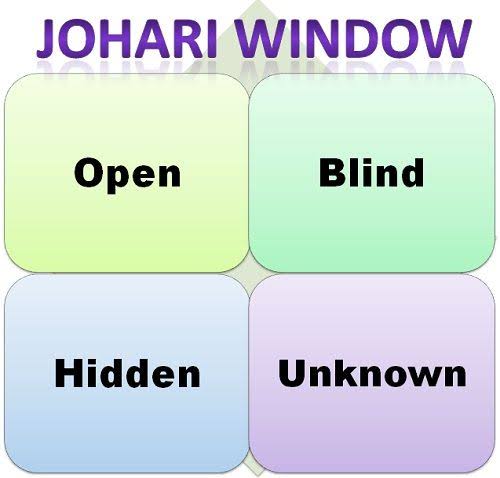
The Open Area, also known as the Arena, represents the aspects of ourselves that are known to both us and others. It encompasses our beliefs, behaviors, experiences, and emotions that we are comfortable sharing openly. By embracing transparency and expressing our thoughts and feelings authentically, we create an environment of trust and mutual understanding.

2. The Hidden Area: Discovering Your Private Self
The Hidden Area consists of those aspects of ourselves that we choose to keep hidden from others. It may include our fears, insecurities, past traumas, or personal struggles. While it’s natural to guard certain parts of ourselves, revealing these hidden aspects to trusted individuals can foster deeper connections and provide opportunities for personal growth.

3. The Blind Spot: Uncovering Your Blind Spots
The Blind Spot refers to the aspects of ourselves that others can see but remain unknown to us. It represents the gaps in our self-perception and the potential discrepancies between how we perceive ourselves and how we are perceived by others. Feedback from trusted individuals becomes crucial in expanding our self-awareness, enabling us to address our blind spots and gain a more accurate understanding of ourselves.

4. The Unknown Area: Exploring the Uncharted Territory
The Unknown Area represents the untapped potential within us, including hidden talents, undiscovered passions, and unrealized capabilities. It is the realm of self-discovery and personal growth, where we can actively seek new experiences, challenge our limitations, and expand the boundaries of our self-awareness. Embracing the unknown allows us to unlock our true potential and lead a more fulfilling life.

Conclusion:
The Johari Window provides a powerful framework for self-reflection, self-awareness, and personal growth. By exploring the four quadrants of the window, we gain insights into our known and hidden selves, uncover our blind spots, and embrace the unexplored aspects of our being. The journey of self-discovery facilitated by the Johari Window not only enhances our understanding of ourselves but also fosters healthier and more meaningful relationships with others. Through open and honest communication, feedback, and a willingness to explore the unknown, we can continuously expand our window and create a more authentic and fulfilling life.

Choice Based Credit System (CBCS) introduced by the UGC

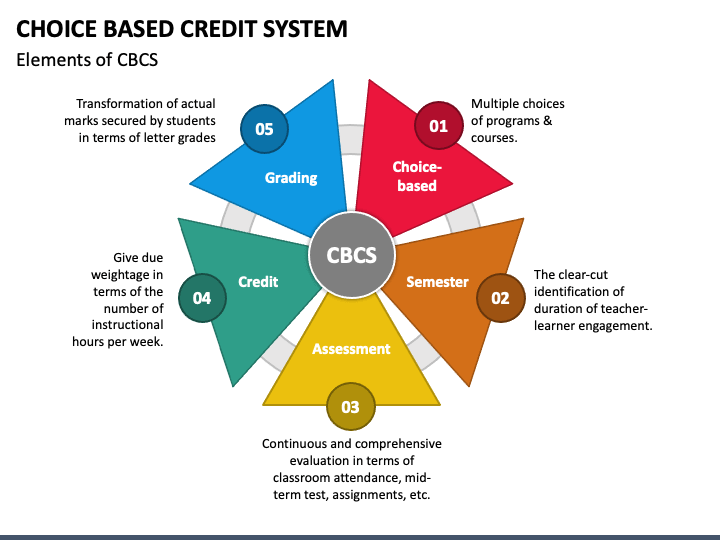
45. What are the advantages of Choice Based Credit System (CBCS) introduced by the UGC for higher education

institutions? (a) Focuses on student-centric education

(b) Allows students to choose inter-disciplinary and intra-

disciplinary courses.

(c) Makes education at par with global standards

(d) Makes it easy to estimate the performance levels of

students in terms of marks.

(e) Offers flexibility for students to undertake studies at

different times and at different institutions.

Choose the correct answer from the options given below: B. (b), (c), (d), (e) only

A. (a), (b), (c), (d) only

D. (c), (d), (e) (a) only

C. (a), (b), (c), (e) only

The correct answer is C. (a), (b), (c), (e) only.

Explanation:

The advantages of the Choice Based Credit System (CBCS) introduced by the UGC for higher education institutions are:

(a) Focuses on student-centric education: The CBCS places emphasis on student-centric education, allowing students to choose courses based on their interests, aptitudes, and career goals. This approach promotes personalized learning and enables students to shape their educational journey.

(b) Allows students to choose inter-disciplinary and intra-disciplinary courses: The CBCS offers students the flexibility to choose courses from different disciplines, encouraging interdisciplinary learning. It also allows students to specialize within a discipline by offering a variety of courses within the same field.

(c) Makes education at par with global standards: The CBCS aligns higher education in India with global standards by adopting credit-based systems that are widely recognized and accepted internationally. This makes it easier for students to pursue further studies or seek employment opportunities abroad.

(e) Offers flexibility for students to undertake studies at different times and at different institutions: The CBCS provides flexibility for students to study at their own pace and convenience. They can choose to take up additional courses, transfer credits across institutions, or even take a break and resume their studies later without losing their academic progress.

The option (d) is incorrect because estimating the performance levels of students in terms of marks is not specifically mentioned as an advantage of the CBCS. The focus is more on personalized learning and student-centric approaches rather than the ease of estimating performance solely based on marks.

Therefore, the correct answer is C. (a), (b), (c), (e) only.

Equality of education

  1. Given below are two statements:

Statement I: Equality of educational opportunities is a pre-

condition for achieving equity in education.

Statement II: Equity in education can be achieved without

equality of educational opportunities In the light of the above statements, choose the correct

answer from the options given below:

A. Both Statement I and Statement II are true

B. Both Statement I and Statement II are false

C. Statement I is correct but Statement II is false D. Statement I is incorrect but Statement II is true

The correct answer is C. Statement I is correct but Statement II is false.

Explanation:

Statement I: Equality of educational opportunities is a pre-condition for achieving equity in education. This statement is correct. Equality of educational opportunities refers to ensuring that all individuals have equal access to quality education, regardless of their background or circumstances. Without equal opportunities, achieving equity, which is about fairness and providing additional support to those who need it, becomes challenging.

Statement II: Equity in education can be achieved without equality of educational opportunities. This statement is false. Equity in education is closely linked to ensuring equal opportunities for all individuals. Without addressing inequalities in access, resources, and opportunities, achieving true equity becomes difficult. Equality of educational opportunities is an essential component of achieving equity in education.

VALUE

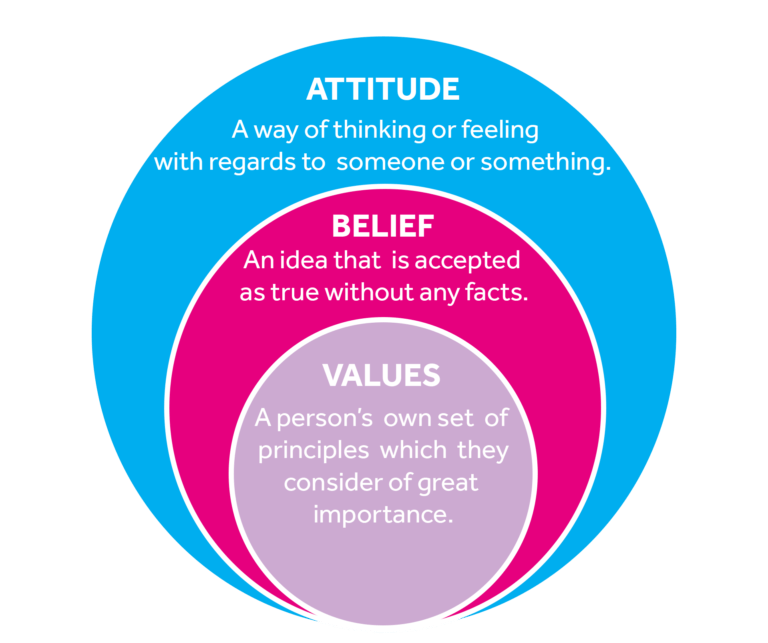
  1. Which of the following explain the concept of values? (a) Values are beliefs tied inextricably to Human emotion

and behaviour (b) Values refer to desirable goals people strive to attain

(c) Values are conflict-free

(d) Values are ordered by importance relative to one

another

(e) Values are utilized primarily to effect change in knowledge of a person

Choose the correct answer from the options given below:

A. (a), (b), (c) only B. (a), (b), (d) only

C. (b), (c), (d) only D. (c), (d), (e) only

The correct answer is B. (a), (b), (d) only.

Explanation:

Option (a) is correct because values are indeed beliefs that are closely tied to human emotions and behavior. They guide our actions and choices based on what we perceive as important and meaningful.

Option (b) is correct as well because values represent desirable goals that individuals strive to achieve. They reflect what we consider to be important or valuable in life.

Option (c) is incorrect. Values are not necessarily conflict-free. Different individuals or groups may hold different values, which can lead to conflicts or disagreements.

Option (d) is correct because values are typically ordered by importance relative to one another. We prioritize certain values over others based on their significance to us.

Option (e) is incorrect. While values can influence our actions and decisions, they are not primarily utilized to effect change in knowledge. They are more focused on guiding behavior and shaping individual perspectives.

Therefore, the correct answer is B. (a), (b), (d) only.

ENVIRONMENT International Agreements / Convention / Protocols

36. Which of the International Agreements / Convention / Protocols are legally binding on the member countries (parties)?

(a) Convention on Biological Diversity

(b) Kyoto Protocol

(c) Montreal Protocol

(d) Paris Agreement

Choose the most appropriate answer from the options

given below:

A. (c) only

B. (a) and (c) only

C. (a), (b) and (c) only

D. (b), (c) and (d) only

Apologies for the confusion. You are correct. The most appropriate answer is:

B. (a) and (c) only

The Convention on Biological Diversity (CBD) and the Montreal Protocol are legally binding on the member countries (parties). The Kyoto Protocol was legally binding during its commitment period, which ended in 2020. The Paris Agreement is not technically legally binding, but it contains provisions that are legally binding, such as reporting requirements and transparency mechanisms. Therefore, option B is the correct answer.

Apologies for the confusion caused by my previous response. Allow me to provide the correct explanation for each protocol:

1. Convention on Biological Diversity (CBD):
The Convention on Biological Diversity is an international treaty adopted in 1992. It aims to promote the conservation of biodiversity, the sustainable use of its components, and the fair and equitable sharing of benefits arising from genetic resources. The CBD is legally binding on its parties, which means that countries that have ratified the treaty are obligated to implement its provisions and fulfill their commitments. The CBD sets out general principles and objectives for biodiversity conservation, but it also includes specific legally binding obligations, such as the development of national biodiversity strategies, the protection of ecosystems and species, and the sharing of genetic resources.

2. Kyoto Protocol:
The Kyoto Protocol is an international agreement linked to the United Nations Framework Convention on Climate Change (UNFCCC). It was adopted in 1997 and entered into force in 2005. The Kyoto Protocol aimed to address global climate change by setting binding emission reduction targets for industrialized countries, known as Annex I parties. It introduced the concept of “carbon credits” and established mechanisms such as emissions trading and the Clean Development Mechanism (CDM). However, the Kyoto Protocol’s commitment period ended in 2020, and it is no longer legally binding.

3. Montreal Protocol:
The Montreal Protocol on Substances that Deplete the Ozone Layer is an international treaty adopted in 1987. Its objective is to protect the Earth’s ozone layer by phasing out the production and consumption of ozone-depleting substances (ODS), such as chlorofluorocarbons (CFCs) and hydrochlorofluorocarbons (HCFCs). The Montreal Protocol is legally binding on its parties, which means that countries that have ratified the treaty are legally obligated to implement its provisions. The protocol includes specific obligations, such as the control of ODS production and consumption, the promotion of alternative technologies, and financial assistance to developing countries for compliance.

4. Paris Agreement:
The Paris Agreement is an international treaty adopted in 2015 under the UNFCCC. It aims to address climate change by limiting global warming to well below 2 degrees Celsius above pre-industrial levels and pursuing efforts to limit the temperature increase to 1.5 degrees Celsius. The Paris Agreement establishes a framework for countries to submit nationally determined contributions (NDCs) outlining their efforts to reduce greenhouse gas emissions and adapt to the impacts of climate change. While the Paris Agreement as a whole is not legally binding, its provisions include legally binding elements. For example, countries are legally bound to submit NDCs, report on their emissions and progress, and participate in a transparency framework that promotes accountability and review of their actions.

To summarize, the correct answer is:

B. (a) and (c) only

The Convention on Biological Diversity (CBD) and the Montreal Protocol are legally binding on the member countries (parties). The Kyoto Protocol was legally binding during its commitment period, which ended in 2020. The Paris Agreement is not entirely legally binding, but it contains provisions that are legally binding, such as reporting requirements and transparency mechanisms.

In a world of treaties and global pacts,
Where agreements bind nations as acts,
Let me clarify the confusion that arose,
And provide clarity in poetic prose.

The Convention on Biological Diversity,
A treaty aiming for nature’s prosperity,
It is legally binding, countries must comply,
To conserve biodiversity, let it never die.

Next, the Kyoto Protocol takes its stance,
With emission targets, a climate change dance,
But its binding nature has come to an end,
The commitment period over, my dear friend.

The Montreal Protocol, a hero’s tale,
To protect the ozone layer, it did prevail,
Legally binding, countries joined the fight,
Phasing out ozone-depleting substances, a shining light.

Lastly, the Paris Agreement we must mention,
A treaty forged to combat global warming’s tension,
Though not entirely binding in its scope,
Some provisions hold countries with legal rope.

So, the answer you seek in this poetic song,
Is option B, where clarity belongs,
The CBD and Montreal Protocol hold the key,
Legally binding, ensuring compliance universally.

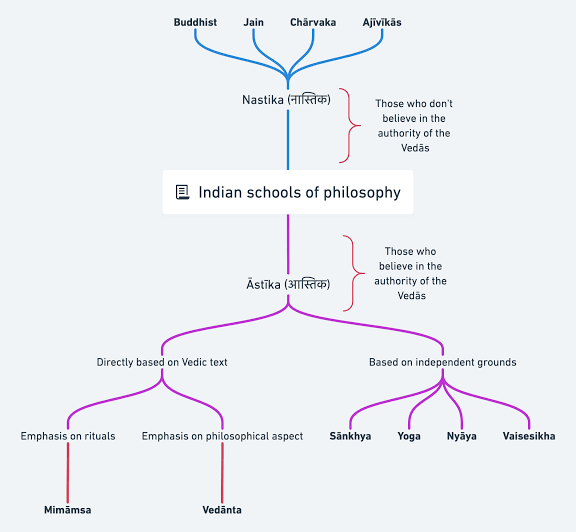
Indian philosophy, the systems of thought, and reflection that were developed by the civilizations of the Indian subcontinent. They include both orthodox (astika) systems, namely, the Nyaya, Vaisheshika, Samkhya, Yoga, Purva-Mimamsa (or Mimamsa), and Vedanta schools of philosophy, and unorthodox (nastika) systems, such as Buddhism and Jainism. Indian thought has been concerned with various philosophical problems, significant among which are the nature of the world (cosmology), the nature of reality (metaphysics), logic, the nature of knowledge (epistemology), ethics, and the philosophy of religion.

Concepts Schools
Abhava
Abhava means non-existence, negation, nothing, or absence.

It is the negative of Bhava which means being, becoming, existing, or appearance.

The Vaisheshika, the Nyaya, the Bhatta Mimamsa, and Dvaita schools hold Abhava as a distinct category. Recognized as a reality by the Nyaya school, Abhava is often stated to be the reality of the greatest moment in the pluralistic universe and is connected with Mukti.

Anuplabdhi
Anupalabdhi means ‘non-recognition’, ‘non-perception’.

This word refers to the Pramana of Non-perception which consists of the presentative knowledge of negative facts.

According to the Bhatta school of Purva-Mimamsa and Advaita-Vedanta system of philosophy, Anupalabdhi is a way to apprehend an absence; it is regarded as a means of knowledge, the other five being – pratyaksa (‘perception’), anumana (‘inference’), sabda (‘testimony’), upamana (‘comparison’) and arthapatti (‘presumption’). The perception of negation or non-existence in its various forms is also due to the relation of attributiveness.

Apoha
The apoha theory is first and foremost an approach to the problem of universals — the problem of the one over the many.

The apoha theory is a distinctive Buddhist approach to being a nominalist.

Syadavada
Syadvada, in Jaina metaphysics, the doctrine that all judgments are conditional, holding good only in certain conditions, circumstances, or senses, expressed by the word syat (Sanskrit: “may be”). The ways of looking at a thing (called naya) are infinite in number.

School of Philosophy

School of Philosophy | Description
———————|————-
Nyaya | The Nyaya school focuses on logical analysis and reasoning…


Vaisheshika | Vaisheshika philosophy deals with the nature of reality…


Samkhya | The Samkhya system analyzes the dualistic nature of existence…


Yoga | Yoga philosophy, as described in the Yoga Sutras of Patanjali…


Purva-Mimamsa | Purva-Mimamsa, also known as Mimamsa, focuses on the interpretation…


Vedanta | Vedanta philosophy explores the nature of reality…


Buddhism | Buddhism, founded by Gautama Buddha, focuses on the alleviation…


Jainism | Jain philosophy, founded by Mahavira, emphasizes non-violence